Why Is Fire Damper Maintenance Essential for Building Safety and Compliance?
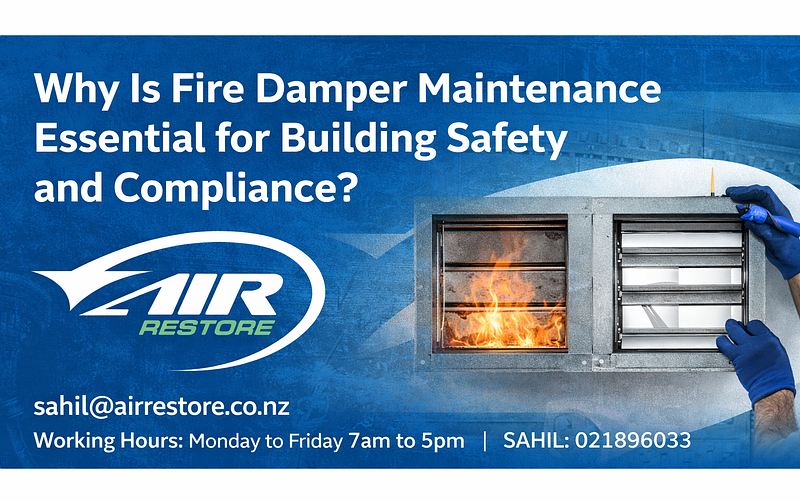
When it comes to protecting lives and property during a fire emergency, few systems are as critical as fire and smoke dampers. Hidden within walls, ceilings, and ductwork, these components may go unnoticed in daily operations but during a fire, they become your building’s first line of defense.
Fire Damper Maintenance is not just a regulatory requirement; it’s a life-saving necessity. Routine inspection, cleaning, and testing ensure your dampers will activate properly when exposed to heat or smoke, preventing flames from spreading through HVAC duct systems. Without regular maintenance, dust, debris, corrosion, or mechanical failure can prevent dampers from closing, putting your building and its occupants at serious risk.
At Air Restore, we specialize in professional Fire Damper Maintenance services across New Zealand. Our experienced technicians follow strict industry standards, including NFPA and JCAHO guidelines, ensuring your building remains safe, compliant, and fully protected.
What Are Fire Dampers and Why Do They Matter?
Fire dampers are passive fire protection devices installed within HVAC ducts and air transfer openings. Their purpose is simple yet vital:
When a fire breaks out and heat reaches a certain temperature, the damper automatically closes to prevent flames and smoke from spreading to other areas of the building.
In large commercial buildings such as hospitals, shopping centres, offices, hotels, and industrial facilities — HVAC systems connect multiple rooms and floors. Without properly functioning fire dampers, these duct systems can quickly become pathways for fire and smoke.
That’s why consistent Fire Damper Maintenance is essential.
What Happens Without Regular Fire Damper Maintenance?
Over time, fire dampers are exposed to:
- Dust accumulation
- Grease buildup
- Rust and corrosion
- Mechanical wear and tear
- Obstructions from renovations or construction
These issues can prevent dampers from closing properly during an emergency. A damper stuck in the open position is essentially useless in a fire situation.
Neglecting Fire Damper Maintenance can result in:
- Failed fire inspections
- Non-compliance penalties
- Increased fire spread risk
- Insurance complications
- Life-threatening hazards
Routine servicing ensures every damper is accessible, clean, functional, and compliant with fire safety regulations.
Our Comprehensive Fire Damper Maintenance Services
At Air Restore, we provide complete Fire Damper Maintenance solutions nationwide, covering major cities across New Zealand including Auckland, Wellington, Christchurch, Hamilton, Tauranga, Rotorua, Dunedin, Nelson, Queenstown, Hawke’s Bay, Blenheim, Palmerston North, and more.
Here’s how we keep your system operating at its best:
1. Fire Damper Testing & Inspection
Testing and inspection are the backbone of effective Fire Damper Maintenance.
Our certified technicians:
- Locate and access each damper
- Inspect components for corrosion or damage
- Test closure mechanisms
- Verify fusible links and springs
- Ensure proper reinstallation after testing
- Document compliance results
We follow NFPA and JCAHO standards to ensure every damper performs as designed. Detailed reporting provides you with full compliance documentation for audits and inspections.
Regular testing helps detect minor issues before they turn into costly repairs or compliance violations.
2. Fire Damper Cleaning & Preventive Maintenance
Dust and debris are the most common reasons for damper malfunction. Over time, even small particles can restrict movement or prevent full closure.
Our preventive Fire Damper Maintenance services include:
- Removing dust, dirt, and debris
- Lubricating moving parts
- Checking alignment
- Inspecting access doors
- Ensuring no obstructions are present
Cleaning not only improves reliability but also extends the lifespan of your fire dampers. Proper maintenance reduces friction, prevents corrosion, and ensures smooth activation during emergencies.
Preventive care is far more cost-effective than emergency repairs or system replacements.
3. Repairs & Replacements
If we discover any issues during inspection, our skilled technicians act quickly.
We provide:
- Replacement of damaged fusible links
- Spring mechanism repairs
- Frame realignment
- Damper blade repair
- Complete damper replacement when necessary
Using high-quality components and industry-approved techniques, we restore your system to optimal condition. Timely repairs prevent further damage and ensure your building remains compliant with fire safety regulations.
The Fire Damper Maintenance Process: How We Get It Done
We follow a clear, structured process to ensure thorough and reliable service.
1. Initial Consultation
We assess your building layout, number of dampers, and regulatory requirements. Based on this, we create a customized Fire Damper Maintenance plan tailored to your facility.
2. Inspection & Testing
Our team conducts detailed inspections and operational testing of all dampers. Every unit is documented for compliance purposes.
3. Cleaning & Repairs
We perform necessary cleaning, lubrication, adjustments, or part replacements to ensure flawless performance.
4. Reporting & Documentation
You receive detailed reports outlining inspection findings, compliance status, and recommended actions.
5. Ongoing Maintenance Plans
We offer scheduled Fire Damper Maintenance programs to ensure continuous compliance and safety year-round.
How Often Should Fire Damper Maintenance Be Performed?
According to NFPA standards:
- Fire dampers should be inspected and tested one year after installation.
- After that, testing should occur every 4 years in most commercial buildings.
- In hospitals, testing is typically required every 6 years.
However, high-risk environments may require more frequent inspections.
Regular maintenance ensures you stay compliant and avoid unexpected inspection failures.
Benefits of Routine Fire Damper Maintenance
Investing in professional Fire Damper Maintenance offers multiple advantages:
1. Enhanced Life Safety
Properly functioning dampers stop fire and smoke from spreading, protecting occupants and first responders.
2. Regulatory Compliance
Meet NFPA, JCAHO, and local fire code requirements with documented inspections.
3. Reduced Liability
Demonstrate due diligence in maintaining fire safety systems.
4. Cost Savings
Prevent expensive repairs, fines, and insurance complications.
5. Extended Equipment Lifespan
Routine cleaning and lubrication reduce wear and tear.
Why Choose Air Restore?
Choosing the right partner for Fire Damper Maintenance makes all the difference.
At Air Restore, we offer:
- Certified and experienced technicians
- Nationwide coverage across New Zealand
- Full compliance documentation
- Advanced inspection tools
- Minimal disruption to operations
- Transparent reporting and honest recommendations
We understand that fire protection systems are critical infrastructure. That’s why we treat every project with precision, professionalism, and urgency.
Frequently Asked Questions (FAQ)
1. What is Fire Damper Maintenance?
Fire Damper Maintenance involves inspection, testing, cleaning, and repair of fire and smoke dampers to ensure they function correctly during a fire emergency.
2. Why is Fire Damper Maintenance required?
It is required to comply with fire safety regulations such as NFPA standards and to ensure life safety within commercial buildings.
3. How do I know if my fire dampers need servicing?
If your building hasn’t had documented inspections within the recommended timeframe, it’s likely due for maintenance. Visible corrosion, construction debris, or failed inspections are also indicators.
4. Can fire dampers fail without maintenance?
Yes. Dust buildup, corrosion, mechanical wear, or obstructions can prevent dampers from closing properly, rendering them ineffective during a fire.
5. How long does Fire Damper Maintenance take?
The duration depends on the number of dampers and building size. A full inspection may take several hours to a few days for large facilities.
6. What standards do you follow?
We follow NFPA, JCAHO, and relevant local fire code standards to ensure full compliance.
7. Do you provide documentation for compliance audits?
Yes. We provide detailed inspection and compliance reports for regulatory authorities and insurance requirements.


Comments
Post a Comment